Calitem vs Spendesk: invoices and expenses
Spendesk links cards, purchases, budgets and invoices. Compare your view of spending with the accounting treatment of purchases in Calitem.
Last updated:
Short answer
Choose Calitem to automate business processes with custom workflows, including purchase checks, line-level allocations and your own approval rules. It adapts to the rules of companies and accounting firms and generates journal entries for their ERP.
Consider Spendesk if you want to control spending from purchase request to payment, combining cards, invoices, reimbursements and budgets. Its offering brings together employees, approvers and finance around that circuit.
What is Spendesk and how does it work?
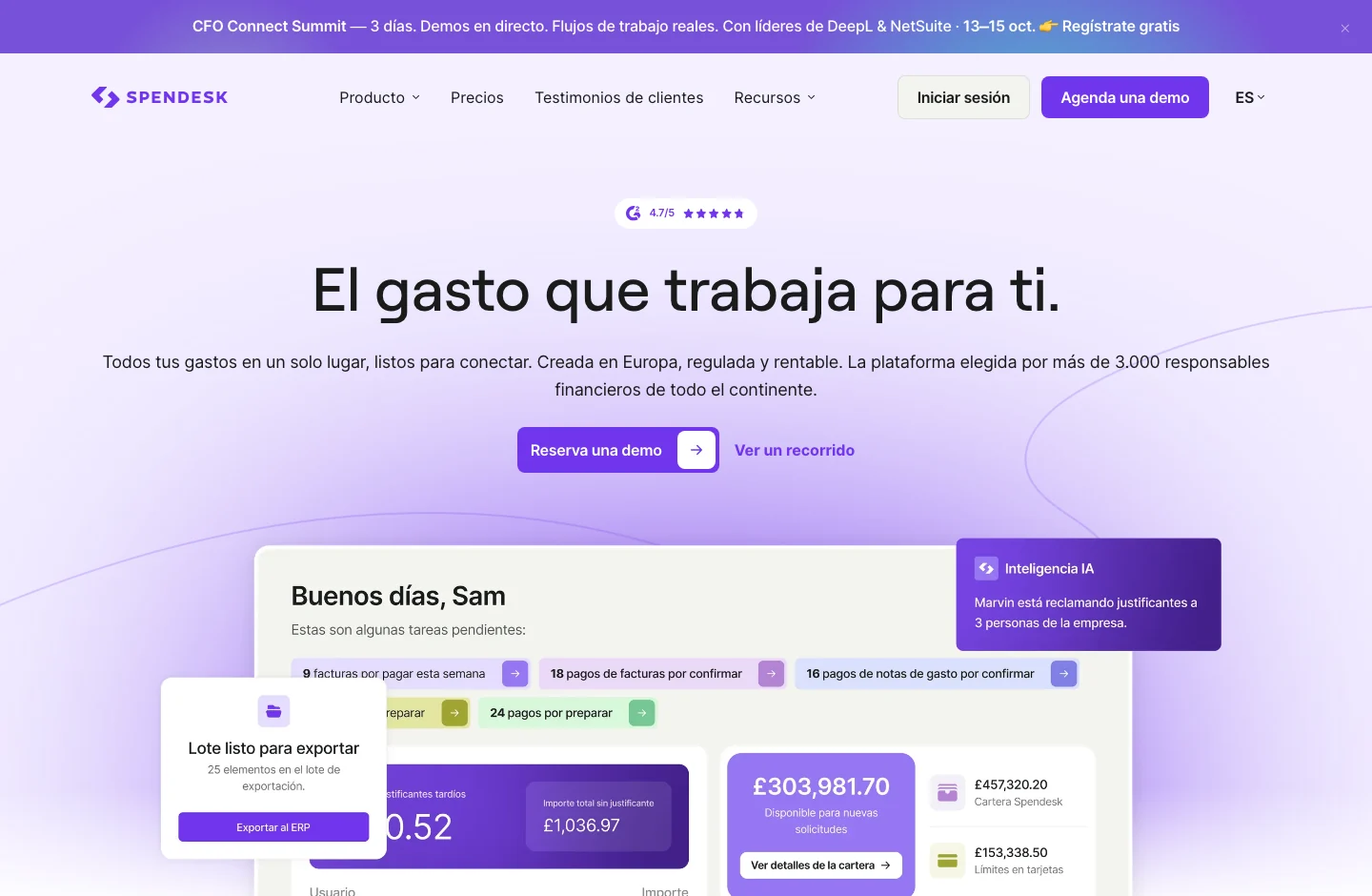
Spendesk is a business expense management platform. Connect purchases, corporate cards, expense notes, invoices and budgets. The finance team can organize authorizations, track spending, and prepare information for accounting from a single environment.
This is how the work is organized:
- Request a purchase or a means of payment.The employee indicates what he needs to buy. The request can be approved automatically or passed to a manager based on the configured policy.
- Pay and collect receipts.Cards or the supplier invoice process are used. Spendesk collects the necessary data to relate the purchase to its documentation.
- Review and complete the accounting circuit.Finance manages approvals and payments, prepares the data, and sends it to the connected accounting system.
Spendesk and Calitem share document and approval automation. Spendesk combines this work with means of payment and control of the requested expense; Calitem focuses on accounts payable accounting checks and rules down to entry in ERP.
When Spendesk fits
- Authorization before purchasing.You want teams to ask for and justify the expense before making it.
- Subscriptions and online purchases.You need virtual cards associated with one-time or recurring payments.
- Invoices and employee expenses gathered.You're looking for a common view of various types of expenses and their payments.
What is Calitem?
Calitem is the AI accounting system that automates accounts payable, from receiving documents to posting journal entries in your ERP.
It is designed for companies where each invoice can require several checks: finding the purchase order, checking what was received, allocating the expense and obtaining the right approval. Calitem connects this work with your accounting rules and business systems.
Where Spendesk has the advantage
Virtual cards for specific purchases
Spendesk allows you to request single-use or recurring payment cards. The request follows the authorization policy before activating the payment method, which is useful for online purchases and team subscriptions.
A circuit of requests before spending
The platform connects the purchase request with its approval. It fits when finance needs to intervene before the budget is committed, rather than starting the review when the receipt arrives.
Invoices and payments on the same platform
Your accounts payable management covers receipt and review of invoices, approvals and payment. It can be useful when you want to combine invoice treatment and disbursement with the rest of the business expense.
Joint visibility of cards, expenses and budgets
Spendesk combines different types of expenses in the same tracking system. It is relevant for teams that want to review employee purchases, invoices and budgets with a shared vision between managers and finance.
Where Calitem has the advantage
Documents from your team channels
Calitem receives invoices and documents from email, WhatsApp, Teams and shared repositories. A person in a store or warehouse can send a photo without installing another app. The documentation enters the same accounting process, although it arrives through different channels.
Extraction tailored to your documents
The AI extracts general data, lines and specific fields of your operation. Calitem processes up to 250 documents every five minutes, to absorb large volumes without transcribing invoices one by one. Fields with low confidence are reviewed.
Duplicate invoices under control
Calitem detects duplicate documents automatically. When the same invoice arrives through different channels, your team can identify repetition before it turns into more accounting work.
Matching invoices, purchase orders and delivery notes
Calitem matches the three documents line by line and checks references, quantities, prices and taxes. If more units are invoiced than received, or a price changes, it flags the difference for your team to review before posting.
Accounts and cost centers by line
One invoice can include expenses from several stores, departments or projects. Calitem assigns categories, subaccounts and cost centres to each line using your chart of accounts and the team’s previous classifications.
Approvals that follow your rules
Define who must approve based on the amount, legal entity, cost centre or supplier. Calitem routes each document through the appropriate workflow and can automatically approve transactions that meet your limits.
AI-generated accounting entries
Calitem uses your chart of accounts and previous accounting decisions to generate journal entries and send them to your ERP. Allocations are included, so the team does not have to re-enter information that has already been processed.
Integrations that connect the entire operation
Calitem connects the ERP to stock systems, POS and internal tools using native integrations and an open API. Specific connections adapt to the flow and data your operation needs, to reduce manual transfers between systems.
Several companies, well-organized accounting
Calitem supports multiple legal entities and cost centres. Classifications and approval routes follow your operational structure, whether you are a group of companies or an accounting firm managing clients’ accounts.
Analysis of accounting information
Calitem allows you to analyze the accounting and accounts payable information it processes. Your team can use that data to track the operation and understand expenses, as well as complete the work on each invoice.
Learn more: Document receptionInvoice, purchase order and delivery note matchingApproval workflowsAutomated accounting
Choose Spendesk if…
- You want to approve requests before employees make the purchase.
- You need virtual cards for one-time payments or subscriptions.
- You are looking to manage the payment of invoices within the platform.
- You want to bring together cards, expense notes, and budgets into a common system.
Choose Calitem if…
- You manage a high volume of invoices or processes that require several checks before posting.
- You need to cross invoices, orders and delivery notes by line and detect differences in quantities or prices.
- You distribute the expense of the same invoice between different accounts and cost centers.
- You want to configure approvals by company code, cost center, amount, or supplier.
- You are looking to automate the generation of entries with your chart of accounts and previous classifications.
- You need to connect the ERP with stock systems, POS or other tools in your operation.
Frequently asked questions about Spendesk and Calitem
When to choose Spendesk and when to choose Calitem?
Spendesk fits if you need to control purchases and budgets, provide payment methods to employees and manage invoices and payments in the same environment. Calitem fits if the priority work is automating accounts payable with purchase reconciliation, line-level allocations and your own accounting rules. Both include approvals and integrations; It is worth distinguishing expense control from automating the journey to the journal entry.
What programs does Calitem integrate with?
Calitem integrates with most ERP available on the market, such as A3, Sage, SAP, NetSuite, QuickBooks, Holded and more than 20 others. Available dimensions vary by connector: channels in a3innuva, projects in Sage, and tags in Holded.
How does Calitem manage cost centers?
Calitem uses projects, channels or other dimensions depending on your accounting software. It can assign them automatically using addresses, descriptions, suppliers or products.
How does Calitem match invoices, delivery notes and purchase orders?
Calitem’s document management system matches invoices, purchase orders and delivery notes and compares their products. It checks references, quantities, prices and taxes line by line and flags differences for review.
How does duplicate detection work in Calitem?
Calitem identifies duplicates based on the digital ID of each document and crossing data such as amounts, document number and supplier to flag duplicates to the user.
How does the workflow builder in Calitem work?
In Calitem you can configure routes by company code, cost center, amount or supplier, with automatic approval for operations that comply with your rules.